What Is the Best Smart Glasses to Buy
Quick answer: the best smart glasses to buy are the ones that match your actual use case — if you want hands-free calls and music all day, a camera-free audio frame is the best buy; if you want photos and video from your line of sight, you need a camera model. There’s no single winner, only the right fit.
I’ve spoken with hundreds of buyers, and the number-one mistake I see is picking a flagship because it’s famous, then realizing the camera draws privacy questions at work and the premium features need an app you barely open. So let’s cut through the marketing and match glasses to real needs.
Here’s the decision framework I actually use:
- Camera-free audio frame — for calls, music, and voice assistant without privacy friction. Best for office, daily commutes, and anyone who just wants a better pair of hands-free headphones.
- Camera model — for creators and travelers who want hands-free photo/video. Accept the privacy restrictions in gyms, cruise ships, and exam areas.
- Prescription-ready — if you wear glasses daily, this should be non-negotiable. Look for frames that support prescription lenses directly.
That’s the honest way to answer “what is the best smart glasses to buy.” It’s about matching the tool to your life, not picking the most expensive name.
How Do Smart Glasses Work
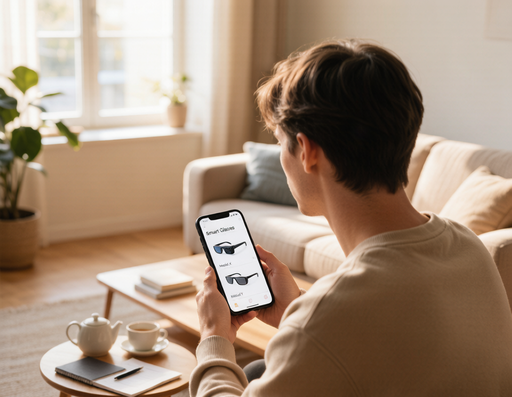
Smart glasses work by hiding a tiny audio module — and sometimes a camera and micro-display — inside a normal-looking frame, then connecting to your phone over Bluetooth for the smart features. The core functions like music and calls run standalone; the AI and app features need your phone.
Let me break down what’s actually inside so you know what you’re paying for:
- Entry audio glasses — Bluetooth playback, calls, voice assistant. No app required for the core stuff, no camera, no display.
- Mid-range — better drivers, camera-free privacy design, longer battery, prescription-ready frames.
- Flagship camera/AI — onboard camera, sometimes a micro-display, AI features that lean heavily on a companion app and phone connection.
This is the “what is smart glass technology” story in one line: it’s computing miniaturized into a frame you wear. And the tech tier is exactly what drives the price gap you see in stores.
What Is Smart Glass Technology
Smart glass technology, in the wearable sense, means packing audio, sensors, and sometimes a camera or display into a frame — and it’s a different category entirely from electrochromic building glass, which is a construction material. The two share a name and nothing else.
The wearable tech that matters for most people:
- Bluetooth audio (speakers in the temples, mics for calls)
- Voice assistant integration
- Camera and/or micro-display on premium models
- Prescription lens support on many frames
From the manufacturing side, I can tell you the tech is more mature than the marketing suggests. A solid audio frame has been doable at an accessible price for a while — the cost is in engineering, not magic. That’s why camera-free audio frames give you the best value per dollar today.
Are Meta Smart Glasses Worth It
Meta smart glasses are worth it if you specifically want a camera you wear with a famous fashion frame — but for most people, a camera-free audio frame delivers the daily value at a much lower cost. Worth it depends entirely on what you’ll actually use.
Let me lay out the honest math. Meta’s appeal is the brand, the camera, and the ecosystem. The cost is the premium price, the app dependence, and the privacy restrictions that come with a camera on your face. If you rarely film or photograph, you’re paying for a feature you’ll use occasionally.
For the daily driver — calls, music, voice assistant — a camera-free audio frame covers it at a fraction of the price, with fewer privacy headaches. That’s the value gap most people don’t see until they’ve owned a flagship for a month.
On the related “is meta coming out with new smart glasses” question — the brand keeps iterating on generations and price points, so the “latest” is always shifting. That’s normal in this category now; it’s a healthy, growing market.
Do Smart Glasses Help Vision
Smart glasses help vision only if you choose a prescription-ready frame — the audio and camera tech don’t correct eyesight by themselves. If you need vision correction, look for frames that support prescription lenses, not just any smart model.
This is a common letdown: people buy smart glasses hoping the tech improves their sight, then find out most audio frames don’t correct vision at all. The fix is simple — pick a prescription-ready model, and you get both the smart features and clear vision in one pair.
For daily vision users, prescription smart glasses are a genuinely good answer: one frame that handles your correction, your calls, and your music. Just confirm the prescription support before you buy, because it’s not universal.
How Do Camera-Free Smart Glasses Protect User Privacy
Camera-free smart glasses protect privacy by removing the camera entirely — there’s no lens to record, so there’s no way to secretly film, and that eliminates the biggest privacy and social friction of smart glasses. You get audio without the surveillance worry.
Here’s why this matters more than people think. Camera glasses are banned in gyms, cruise ships, and exam halls precisely because the camera is a privacy risk. A camera-free design sidesteps all of that — you can wear it anywhere without raising eyebrows, and nobody has to wonder if you’re recording.
For most daily users, the camera is the feature they think they want and the one they end up using least. A camera-free audio frame gives you the everyday value — calls, music, assistant — with none of the privacy baggage. That’s a real advantage, not a missing feature.
What 3D Glasses Work With Samsung Smart TV — a Clearing Up
3D glasses for a Samsung smart TV are passive 3D glasses for old TV models, and they have nothing to do with wearable smart glasses — different product, different technology, different purpose. If that’s your search, you’re in the wrong category.
This is one of the most confusing search collisions in the whole space. “Smart glasses” as a wearable is audio and computing you wear; “3D glasses” for a TV are simple passive lenses that sync with a 3D screen. They don’t overlap.
So if you clicked here looking for TV 3D glasses, you now know you’re on a site about wearable smart glasses — the kind you wear for calls, music, and hands-free capture. If that’s what you actually wanted, keep reading; the buying advice below applies.
How Much Is Privacy Smart Glass
“Privacy smart glass” is a building product term — electrochromic or switchable privacy glass for windows — and it’s priced per square foot, completely separate from wearable smart glasses. If you meant the wearable, that’s covered below; if you meant windows, this is a construction material.
The pricing is wildly different because the products are:
| Category | What it is | Rough price |
|---|---|---|
| Wearable smart glasses (camera-free) | Audio frames you wear | $99–$450 per pair |
| Privacy/electrochromic smart glass | Window glass that tints | $100–$300+ per sq ft |
Both are legitimately useful, but they’re not comparable. For the wearable question, the privacy-smart choice is a camera-free audio frame — no lens, no surveillance worry, just audio you can wear anywhere.
Best Smart Glasses by Use Case
Here’s my recommendation table based on what buyers actually need, using our own factory line as the reference for what’s achievable at each tier:
| Use case | What to look for | Why |
|---|---|---|
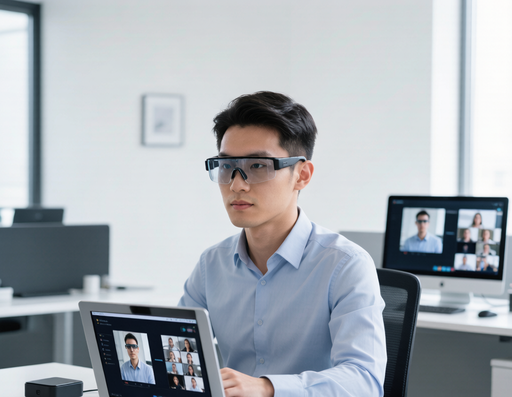
| Office / daily commute | Camera-free audio frame, lightweight | No privacy friction, all-day comfort |
| Running / cycling | Sports frame, anti-slip, UV400, longer battery | Stays put, sweat-resistant |
| Daily vision correction | Prescription-ready frame | Smart features + clear sight in one pair |
| Travel / creation | Camera + AI, offline translation | Hands-free capture, language help |
| Driving / style | Polarized lenses, wide field | Comfort and glare protection |
And here’s how the mainstream names compare, so you can anchor against brand names:
| Model | What you get | Price positioning | Catch |
|---|---|---|---|
| Ray-Ban Meta Gen 2 | Camera + audio, fashion frame | High | App and account required |
| Amazon Echo Frames | Alexa voice, no camera | Mid-high | Tied to Amazon |
| Solos Airgo 3 | Sports audio | Mid | Niche fitness |
| Even G1 / G2 | Basic audio | Low | No prescription support |
Bottom Line
The best smart glasses to buy are the ones matched to your real daily use — camera-free audio for most people, camera models for creators, prescription-ready for daily glasses wearers. Ignore the brand hype and pick the feature set you’ll actually use.
If you’re stocking a line or buying for a team, that same logic applies in bulk: match features to the end user, and you avoid the returns, the unused features, and the disappointed customers. That’s where the value really lives.
A Practical Pick from Our Own Line
If you’re still deciding, the honest advice is to match the frame to your daily routine. For office and commute, our YJ005-A02 looks like ordinary glasses and handles calls and music all day. For runners and outdoor workers, the YJ006 adds anti-slip nose pads, sweat sealing, and polarized UV400 lenses. As an original manufacturer, we can also private-label the same frames for your brand.
If you’re interested in our smart glasses series, feel free to get in touch with us. As an original manufacturer with full production capacity, we offer direct factory supply and customizable solutions to meet your business demands. We look forward to establishing long-term win-win cooperation with you. We offer a full range of smart glasses equipped with diverse functions tailored for all usage scenarios.