Having supplied smart eyewear to retail and wholesale clients across North America and Europe for years, I hear this question at least once a week — are smart glasses actually going mainstream? The honest answer depends entirely on which category you’re talking about.
Basic smart audio glasses are growing fast, no question. We’ve seen repeat wholesale orders climb steadily quarter over quarter, especially for commuter and outdoor styles. But they’re nowhere near as common as regular sunglasses yet. From what my US retail partners tell me, more people are asking about them in store, but most buyers are still daily drivers and field workers who get real use out of hands-free calls. The average casual shopper is still mostly just curious, not ready to buy.
It’s easy to get a skewed view online. Scroll through tech feeds and you’ll see endless meta smart glasses leak posts and meta smart glasses news making it feel like everyone owns a pair. In real life, most consumers are still researching their first pair. A lot of searches are even mixed up — people reach out looking for meta oakley smart glasses that only exist as industry rumors, or confuse wearable glasses with architectural window glass. I get multiple inquiries a month about oakley meta smart glasses stock, and there still isn’t a mass-market model available.
How to set up smart glasses
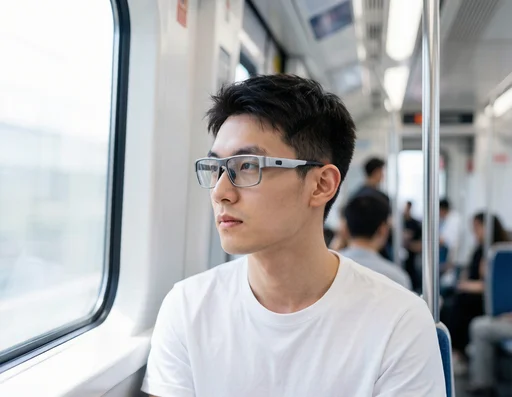
I always slip a one-page quick-start guide into every sample order we send out, because I know firsthand how many first-time users get turned off by overcomplicated setup instructions.
For basic audio models like ours, it really only takes three steps. First, charge the glasses for 10 to 15 minutes right out of the box. Low battery is the number one reason people reach out to support thinking their unit is defective. Second, hold down the power button until the indicator light flashes to enter pairing mode. Third, open your phone’s Bluetooth menu, find the device name, and tap to connect. No account sign-ups, no mandatory app downloads, no extra permissions to approve. You’re ready to take calls and play music right away.
If you’re using a branded pair like ray-ban meta gen 2 smart glasses, there’s an extra layer. You have to download the official Meta View app, sign into a Meta account, and go through in-app pairing to unlock the camera and voice assistant features. Pair directly through Bluetooth settings first, and half of the ray-ban meta smart glasses features won’t work properly. I’ve heard so many buyers complain about that exact frustration when they switch from branded models to our factory line — they’re shocked they don’t need an app just to answer a phone call.
How to operate smart glasses
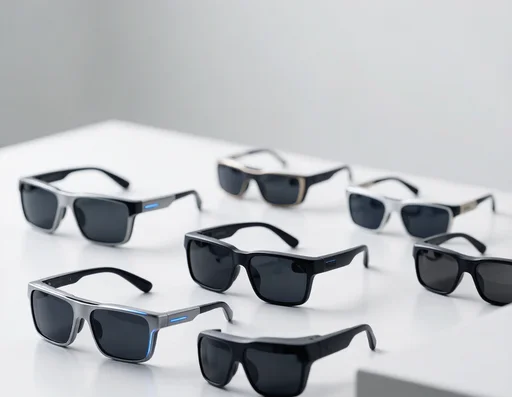
I’ve tested dozens of different smart glasses models over the years, and when you break it down, there are two main control styles: physical buttons and touch-sensitive temples. Each works better for different use cases.
I always recommend button-controlled models for outdoor and sports users. Sweat and light rain don’t mess with the buttons, and you can feel for them without looking down. A short press usually answers or ends a call, a long press powers the unit on and off, and separate volume buttons let you adjust sound without pulling out your phone. It’s simple and reliable.
Touch-controlled models look sleeker and blend in more like regular glasses. You tap or slide along the temple to skip tracks, adjust volume or trigger your phone’s voice assistant. They look cleaner, but there is a small learning curve. So many new customers tell me they accidentally pause their music just by pushing the glasses back up their nose. Most people get the hang of it after a couple of days, but it can feel clunky at first.
Models with built-in cameras usually have a dedicated button or long-press gesture to take photos or start recording. A quick reminder here: privacy rules still apply fully. You may have heard that royal caribbean banned smart glasses in some onboard areas, and that’s exactly why — spaces where people expect privacy, like locker rooms and pool areas, don’t allow wearable cameras, even if they look like regular glasses.
Is sky glass a smart tv
This is one of the most common search mix-ups we see on our product pages, by far.
Yes, Sky Glass is a smart TV line from Sky — and it has absolutely nothing to do with wearable smart eye glasses. It’s just a case of the same broad term “smart glass” getting used for totally unrelated products in different industries. If you landed here looking for TV information, you’ll want to search specifically for Sky Glass under home electronics. If you’re here for wearable smart eyewear, you’re in the right place. We see the exact same confusion with architectural smart glass windows all the time.
Why are glasses associated with being smart
This is more of a cultural question than a tech one, and it comes up more often than you’d think.
For decades, regular prescription glasses have carried the stereotype of being worn by studious, book-smart people, simply because those who read or study for long hours are more likely to need vision correction. That stereotype has stuck around for generations.
That’s completely separate from “smart glasses” as a tech product, though. The “smart” in smart glasses refers to built-in electronics and connectivity, not the intelligence of the person wearing them. A lot of people land on this search term out of curiosity about the phrase, or just by typing the wrong query. If you’re shopping for actual tech eyewear, you’ll get far more accurate results searching for specific terms like smart audio glasses or exact model names.
How do ray ban smart glasses work
When I was researching competitor models for our product line a while back, I took apart an older pair of Ray-Ban Meta glasses, and the internal structure is less mysterious than you might think.
All the core electronics are housed inside the two temple arms: tiny open-ear speakers, voice-capture microphones, a rechargeable battery, and on most Gen 2 models, a small built-in camera module. All data processing runs through your paired smartphone over Bluetooth, for the most part. The glasses themselves handle audio and basic controls, but AI features, photo storage and settings all run through the companion app. That’s why most advanced features stop working if you lose phone service or don’t sign into an account. Higher-end ray-ban meta display smart glasses add a small projection overlay for notifications, but they work on the same core principle — phone-paired, app-driven.
What most people don’t think about is the mechanical mounting of camera modules in smart glasses. Getting the camera angle just right is trickier than it sounds. Mount it too high or too low, and every photo comes out tilted. Mount it too far forward, and it throws off the weight balance, making the glasses slide down your nose and cause pressure after a few hours of wear. That’s one of the biggest quality gaps between cheap no-name models and reliable ones. We test every production batch for even weight distribution and natural camera angle, specifically to avoid those long-wear comfort issues.
How does smart glass windows work
This is a completely separate product category from the wearable smart eyewear we make.
Architectural smart glass windows use electrochromic smart glass technology. A low electrical current changes the tint or transparency of the glass, letting you switch between clear and frosted or dark tint without blinds or curtains. It’s used for office windows, luxury home partitions and retail storefronts for privacy, energy efficiency and glare control.
If you’re sourcing this type of building material, you’ll need to reach out to a construction glass supplier, not a smart eyewear factory like ours. We get visitors landing on our pages from this search term every single week — it’s just how broad the term “smart glass” is across industries.
How to connect smart glasses
Of all the support requests I handle, around 80% of connection issues aren’t caused by product defects — they’re caused by small, easy-to-fix details.
The most common mistake is trying to pair with a dead or low battery. New units ship with partial charge for safety, so always plug them in for 10 minutes first. If the battery is too low, Bluetooth won’t show up on your phone at all, and a lot of people assume the glasses are broken. The second most common issue is leftover pairing records from a previous phone. If you’re switching to a new device, hold down the power button to reset the glasses, then try pairing again. That fixes the problem nine times out of ten.
For basic audio models, you can connect directly through your phone’s Bluetooth menu in under 30 seconds. For ecosystem-specific models like amazon echo frames smart glasses, you’ll get the best experience pairing through the official companion app, so voice assistant features and custom controls work as intended.
What is the smart glasses
Put simply, smart glasses are regular-looking eyewear with built-in electronic components — almost always speakers, microphones and Bluetooth connectivity. More advanced models may add cameras, smart glasses ai features or even small display screens.
The most popular and practical category right now is smart audio glasses. They replace both wireless earbuds and regular sunglasses or prescription frames in one product. They’re huge with commuters, drivers and anyone who doesn’t like wearing earbuds for long stretches.
There are also niche categories. Solos smart glasses target fitness and cycling users. Amazon smart glasses focus on Alexa voice integration. Industrial safety glasses smart certified models add impact protection for worksites. Premium AR models are still mostly aimed at early adopters and business users right now.
There’s a lot of talk online about the best smart glasses 2026 will have to offer. From what I see working directly with factories and component suppliers, the biggest upgrades in the next year or two will be longer battery life, lighter frames and better offline AI features. Full holographic AR like you see in sci-fi movies is still a long way from mainstream consumer use.
One quick note on the infant smart glasses peer reviewed question I get from time to time. There is very little independent peer-reviewed research on smart glasses use for infants and very young children. We don’t manufacture smart glasses for toddlers or babies, and I always advise parents to check with a pediatric optometrist before using any electronic eyewear on young kids. Regular UV-protective children’s sunglasses are a much safer choice for little ones.
Mainstream Smart Glasses Side-by-Side Comparison
表格
| Model | Product Category | Built-in Camera | Mandatory Companion App | Best For |
|---|---|---|---|---|
| ray-ban meta gen 2 smart glasses | Fashion consumer | Yes | Yes (Meta account required) | Style-focused buyers, social media creators |
| amazon echo frames smart glasses | Voice assistant | No | Yes (Amazon account) | Heavy Alexa ecosystem users |
| solos smart glasses | Sports fitness | No | Yes (fitness app) | Regular runners and cyclists |
| g1 smart glasses | Entry-level budget | No | No | First-time casual trial users |
Our Top Repeat-Sell Factory Models
表格
| Model | Frame Type | Battery Life | Standout Feature | My Recommendation For |
|---|---|---|---|---|
| YJ009-M2 | Magnetic dual-lens TR frame | 7–8h | Swap clear / polarized lenses in seconds | Prescription users, all-day indoor-outdoor wear |
| YJ006 | Sports wrap frame | 6h | Sweat-sealed, non-slip nose pads | Runners, delivery drivers, outdoor workers |
| YJ011-A03 | Photochromic square frame | 4–5h | Lenses darken automatically in sunlight | People who move between indoors and outdoors all day |
| YJ003 | Detachable battery frame | 4–5h per battery | Swap batteries on the go without charging | Long-haul travellers, field staff with limited power access |
After working in this industry for years, my number one piece of advice to buyers is always the same: don’t pay extra for features you’ll never actually use. If you just need hands-free calls on your daily commute, a solid mid-range audio model will serve you far better than an expensive premium pair with a camera you’ll pull out once a month. Pick the model that fits your daily routine, not the one with the longest spec sheet.
If you’re interested in our smart glasses series, feel free to get in touch with us. As an original manufacturer with full production capacity, we offer direct factory supply and customizable solutions to meet your business demands. We look forward to establishing long-term win-win cooperation with you.We offer a full range of smart glasses equipped with diverse functions tailored for all usage scenarios.