An “outdoor power bank” label is a starting point, not a guarantee that a battery can be charged in freezing weather, left in direct sun or used with wet ports. For a reliable trip, check the exact model’s charging and operating temperature limits, its documented water and dust protection, the condition of its USB connectors, and the way you will store it between uses. This guide concentrates on environmental care. It does not repeat general capacity math or a broad hiking packing list, and it does not claim that a product pictured here has passed a particular environmental test.
मॉडल की सीमा का उपयोग करें, सामान्य लिथियम-बैटरी नियम का नहीं
चार्जिंग, डिस्चार्जिंग और स्टोरेज में अलग-अलग अनुमत तापमान रेंज हो सकते हैं। सबसे उपयोगी दस्तावेज़ आपके पास मौजूद सटीक इकाई के लिए मैनुअल या इलेक्ट्रिकल लेबल है। एक उदाहरण के रूप में यह क्यों मायने रखता है, Anker’s power-bank safety guide एक शांत, शुष्क चार्जिंग वातावरण की सिफारिश करता है और इसके सामान्य मार्गदर्शन के लिए 0–35 ° C देता है। यह एंकर की सलाह है, इस साइट पर प्रत्येक बैंक के लिए सत्यापित विनिर्देश नहीं। एक पृथक एंकर मॉडल-समर्थन लेख दिखाता है कि एक वास्तविक उपकरण बहुत ठंडा या गर्म होने पर तापमान सुरक्षा को ट्रिगर कर सकता है। सही प्रतिक्रिया यह है कि इकाई को अपनी निर्दिष्ट सीमा में वापस आने दें और इसके मैनुअल का पालन करें, न कि सुरक्षा को बायपास करने के लिए।
बैंक से जुड़ा फोन या कैमरा अपनी सीमा खुद लगा सकता है। Apple का बैटरी-केयर गाइडेंस gives an iPhone operating comfort zone of 0–35°C and warns that high ambient temperatures can damage battery capacity. This is a phone-maker example, not a power-bank operating rating. If the bank is within range but the phone is overheated, charging may still slow or stop. Treat the two devices as a system whose weakest environmental limit controls the session.
| स्थिति | क्या सत्यापित करें | व्यावहारिक प्रतिक्रिया |
|---|---|---|
| वॉल चार्जर से बैंक को चार्ज करना | बैंक का अनुमत चार्जिंग तापमान और इनपुट रेटिंग | निर्दिष्ट सीमा के अंदर एक सूखी, हवादार जगह पर ले जाएँ। |
| बैंक बाहर फोन चार्ज कर रहा है | बैंक डिस्चार्ज रेंज और फोन चार्जिंग सीमा | गर्मी के भार को कम करें और थर्मल चेतावनियों के लिए दोनों उपकरणों की जांच करें। |
| रातोंरात बैंक में जमा | भंडारण रेंज, आर्द्रता मार्गदर्शन और बैटरी स्तर | कुचलने, पानी और अत्यधिक तापमान से सुरक्षित रहें। |
| इकाई असामान्य रूप से गर्म महसूस करती है या क्षतिग्रस्त दिखती है | Maker’s stop-use instructions | Disconnect safely; do not continue charging or open the case. |
हीट: डायरेक्ट-सन चार्जिंग स्टेशन से बचें
A dark battery pack on a rock or car dashboard can warm far above the air temperature. Charging also generates heat inside the bank and the connected device. If either shows a high-temperature warning, reduce the load, stop charging and let it cool in a safe, dry place. Do not put a hot lithium battery in a freezer or immerse it in water to accelerate cooling. Check the manual before resuming use. A ventilated shaded area is usually a better location than a sealed pouch in direct sunlight.
A built-in solar panel creates a design tension: light exposure helps collect energy, while excess heat is undesirable for lithium cells. That does not mean every integrated solar bank is unsafe; it means you need the maker’s tested solar-input and temperature instructions for that exact model. Do not assume a solar panel can fill the pack quickly, or that leaving the whole unit under midday sun is the recommended method. If the maker specifies a detachable panel or shaded battery placement, use that arrangement. Otherwise, regard outlet charging before departure as the dependable baseline.
ट्रेलहेड पर क्या करें
Start with a charged bank and inspect it before packing. Look for swelling, cracked housing, damaged cable insulation and dirt in ports. Keep the device away from keys or metal objects that could bridge exposed connectors. When charging a phone, place both devices where air can circulate and where neither can fall into water. A loose, shaded pocket may be useful for carrying a disconnected pack, but a packed insulated compartment is not a good location for a warm, high-power charging session.
Cold: distinguish temporary performance from safe charging
Cold may temporarily reduce the energy you can obtain from a battery and can trigger protection. Apple’s guidance notes that some cold-related reduction in phone battery life is temporary when the device warms again. That observation should not be used as permission to recharge a cold power bank outside its specified charging range. When you return indoors, allow the pack to reach the allowed range naturally before plugging it in. Check for condensation on the case and especially in the ports; dry the exterior and wait until connectors are dry.
एक शीतकालीन यात्रा भी प्रतिशत प्रदर्शन को कम अनुमानित बना सकती है। एक बैटरी गेज विद्युत व्यवहार से चार्ज का अनुमान लगाता है और तापमान और लोड बदलने पर शिफ्ट हो सकता है। ठंड की स्थिति में फोन शुल्क की एक निश्चित संख्या का वादा करने के बजाय नेविगेशन या आपातकालीन संचार के लिए मार्जिन की योजना बनाएं। यदि कोई बैंक बार-बार ठंड में कटौती करता है, तो उसके मैनुअल से परामर्श लें और अगली यात्रा के लिए एक प्रलेखित कम तापमान वाले डिस्चार्ज रेटिंग वाले मॉडल का चयन करें। "बीहड़" जैसे विपणन शब्द एक निर्दिष्ट सीमा का विकल्प नहीं हैं।
बारिश और गीले बंदरगाह: वास्तविक सुरक्षा दावे की जाँच करें
A rubber flap or thick case does not prove a water-resistance rating. Ask for a model-specific ingress-protection claim, the standard and test conditions behind it, and any exclusions for open ports, cables and charging. A product may resist splashes when its port covers are closed yet have no protection while a USB cable is inserted. Avoid charging in rain unless the manufacturer explicitly permits that use. If a port becomes wet, disconnect power and follow the maker’s drying instructions; do not test a wet connection by repeatedly plugging it in.
Anker’s safety guide explicitly advises avoiding rain, snow and liquids for the products covered by its general guidance and says to stop use if liquid gets inside. That recommendation is a cautious baseline, not a water-resistance test of another brand. Even a model with a stated IP rating requires attention to what was tested: fresh water versus salt water, enclosure closed versus open, and whether impact or ageing can affect seals.
| लिस्टिंग पर दावा | उपयोगी प्रमाण | पूछने के लिए प्रश्न |
|---|---|---|
| ठंड के मौसम में काम करता है | मॉडल-विशिष्ट डिस्चार्ज और चार्जिंग रेंज | क्या इसे फ्रीजिंग के नीचे इस्तेमाल किया जा सकता है, और क्या इसे वहां रिचार्ज किया जा सकता है? |
| जल प्रतिरोधी | परीक्षण मानक और बंदरगाह की स्थिति के साथ आईपी रेटिंग | क्या केबल संलग्न होने पर दावा लागू होता है? |
| सौर सक्षम | पैनल इनपुट रेटिंग और परीक्षण की स्थिति | चार्जिंग समय को कैसे मापा गया, और किस विकिरण पर? |
| प्रभाव प्रतिरोधी | सटीक संशोधन के लिए प्रलेखित ड्रॉप टेस्ट | कौन सी ऊंचाई और सतह, और बंदरगाहों को कवर किया गया था? |
| यात्रा के लिए उपयुक्त | Readable Wh label and safety instructions | क्या वास्तविक इकाई मेरे वाहक के नियमों का अनुपालन करती है? |
उत्पाद और पैकिंग विधि एक साथ चुनें
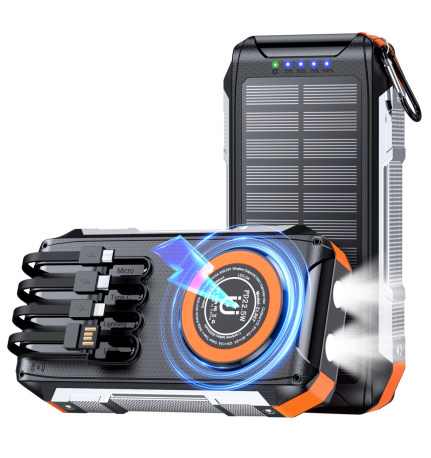
हमारे 30,000mAh सौर ऊर्जा बैंक लिस्टिंग shows an outdoor-style format with integrated connectors. Those visible design elements help a buyer frame questions, but they do not verify waterproofing or a cold-weather rating. Our 20,000mAh सौर ऊर्जा बैंक लिस्टिंग is another size option; choosing between them requires their current manuals, Wh markings, weight and environmental specifications. Neither listing should be read as a promise that solar input will replace mains charging on a particular trip.
Before ordering for a field team, send the supplier the intended temperature range, rain exposure, number of daily charging sessions, required USB outputs and travel route. Request the exact model revision’s operating and charging ranges, ingress rating if claimed, port-cover instructions, battery Wh marking and warranty terms for environmental damage. If the supplier cannot document a claimed feature, mark it as unverified and choose your packing approach accordingly.
यात्रा के बाद: सूखा, निरीक्षण करें और स्टोर करें
Let the unit cool and dry before sealing it in a bag. Wipe the exterior with a dry cloth, inspect ports for debris, and avoid metal tools inside connectors. Do not open a lithium pack to dry it. If water entered the case, the housing swelled, or the unit smelled unusual or became excessively hot, stop using it and contact the manufacturer for handling instructions. For longer storage, follow the exact model’s charge-level and inspection guidance; Anker’s general guide, for example, suggests periodic checks and recharging, but that schedule is not universal.
The practical rule is simple: protect the battery from heat, do not charge it outside its stated temperature range, keep electrical contacts dry, and demand evidence for water- or impact-resistance claims. Outdoor reliability is a combination of model design, documented limits and how you carry and use the pack, not a property conferred by a rugged-looking photograph.
स्रोत और दायरा
प्राथमिक संदर्भ: Anker power-bank safety guide, एंकर तापमान-सुरक्षा समर्थन, और Apple बैटरी प्रदर्शन मार्गदर्शन. The cited limits belong to those manufacturers’ examples. No environmental certification or temperature test is asserted for the linked site products.