The best smart glasses align tightly with your daily routine; casual commuters, frequent travelers and prescription wearers will prioritize completely different features to avoid long-term usability frustrations.
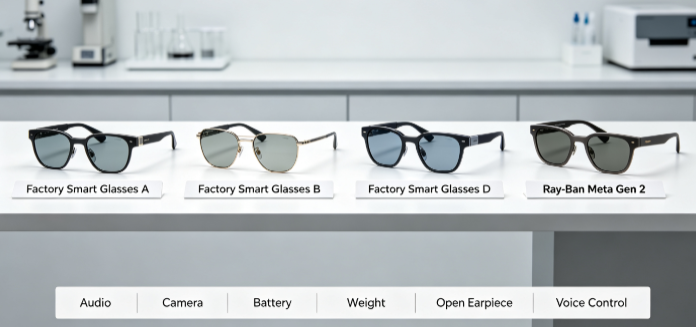
After communicating with hundreds of long-term users across North America and Europe, I’ve found most buyers regret their purchase because they only compare basic specs at first, ignoring small persistent annoyances that surface after weeks of daily wear. Premium branded lines such as ray ban meta wayfarer gen 2 smart glasses deliver recognizable styling, yet many owners complain about limited battery life, closed software ecosystems and costly prescription upgrades.
I’ve selected four factory models built around real user pain points, with clear use-case positioning for different lifestyles:
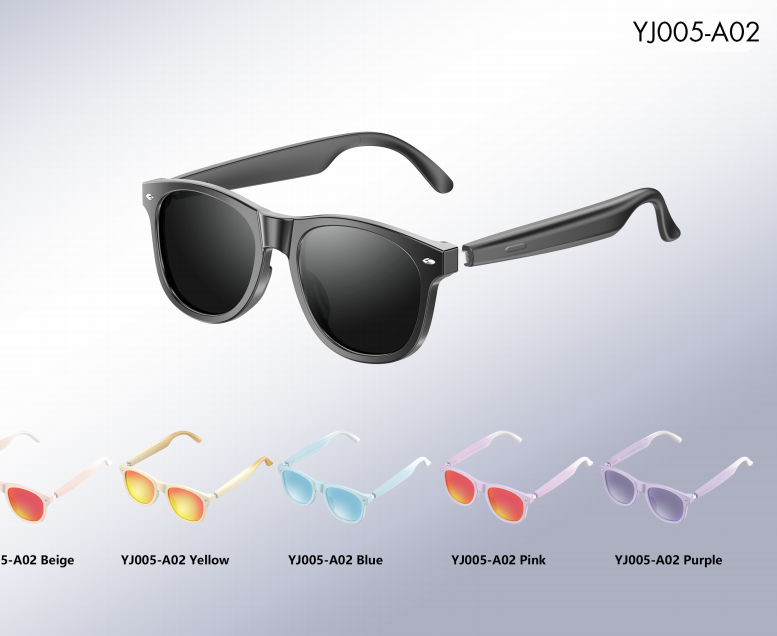
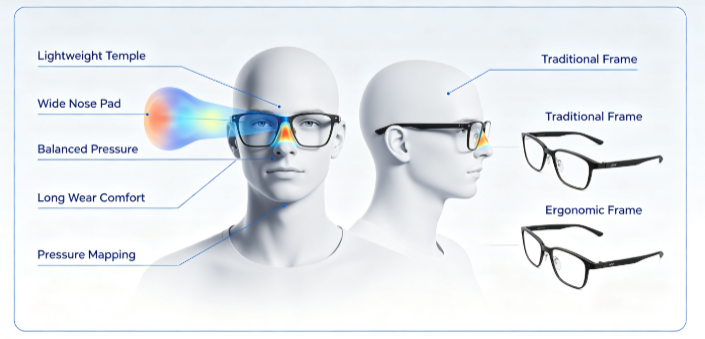
- YJ005-A02 Transparent Smart Music Eyewear: Designed for office daily wear. The lightweight transparent frame avoids looking like sport sunglasses indoors, balanced frame weight eliminates nose bridge soreness after 6+ hours of meetings; ideal for users who only need calls and music without outdoor polarized lenses.
- YJ008-C TR Polarized Smart Sunglasses: Made for drivers and casual outdoor commuters. Flexible TR material fits different head shapes, UV400 polarized lenses cut highway glare, magnetic charging prevents loose contact issues; great for anyone spending hours on the road every week.
- YJ007-K28 Gradient Pilot Metal Smart Sunglasses: Fashion-focused aviator frame for weekend travel. Gradient tint balances bright sunlight and shaded environments, optimized microphone reduces wind noise during cycling and walking, popular with younger shoppers prioritizing appearance alongside function.
- YJ-AR002 AI Power Smart Glasses: Built for international business travelers. Supports offline language translation, functioning as smart glasses that translate without phone app, eliminating reliance on cellular data abroad; built-in camera captures meeting records and travel footage for content creators.
If you are comparing options like g1 smart glasses, samsung smart glasses and xiaomi smart glasses, pay attention to daily friction points: mandatory app login, lens replaceability and all-day comfort, not just marketing feature lists.
how does smart foggy glass work
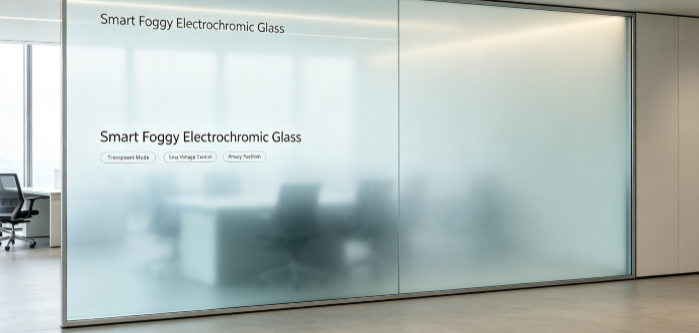
Smart foggy glass relies on embedded conductive film and electric current to switch between transparent and frosted states; this architectural material has no functional overlap with wearable consumer smart glasses.
Many shoppers confuse building smart foggy glass and wearable eyewear after seeing both listed under similar search terms. The dimming foggy glass used in offices, bathrooms and partition walls uses electrochromic layers sandwiched between two sheets of glass. When power is applied, suspended particles align to become clear; without electricity, particles scatter light to create an opaque frosted effect, also often grouped together with smart glass film and smart glass windows.
This technology requires thick glass panels and constant power supply, making it impossible to miniaturize into lightweight wearable frames. If you want adjustable tint on eyewear, photochromic lenses on our YJ008-C and YJ007-K28 offer a wearable alternative, which automatically darkens outdoors and lightens indoors without external power, far more practical than trying to adapt building dimming technology for glasses worn on your face.
how is smart glass made
Architectural smart glass and wearable smart eyewear follow entirely separate manufacturing workflows, each requiring specialized materials, precision assembly and long-duration reliability testing.
Wearable smart eyewear production begins with frame molding, circuit board welding, miniature battery assembly and lens coating. For our four featured models, every frame undergoes repeated bend testing, sweat corrosion testing and continuous Bluetooth connection aging checks before packaging. Small details such as the position of built-in microphones and weight distribution are adjusted based on thousands of user feedback about all-day comfort.
Branded products including ray ban meta wayfarer smart glasses outsource many assembly stages to shorten lead times, which can create minor consistency differences between batches. Our factory completes molding, electronic assembly and lens processing in-house, allowing us to tweak frame curvature and weight distribution according to real user wearing feedback. For architectural smart foggy glass and smart glass film, manufacturers laminate conductive film between glass panels and seal edges to prevent moisture damage, a completely separate production chain unrelated to wearable tech.
what are apple smart glasses
Apple smart glasses refer to long-rumored Apple AR wearable devices; as of now, no official mass-market retail model has launched, all available consumer smart eyewear comes from Meta, Samsung, Xiaomi and independent OEM manufacturers.
A large number of buyers hold off purchasing smart glasses waiting for Apple’s rumored wearable product, hoping it will solve common pain points seen on existing models. Based on leaked industry information, the prototype focuses on lightweight AR display and tight integration with iOS ecosystems. Still, there is no confirmed release timeline, and potential buyers face a long wait with unknown final pricing and feature limitations.
In the meantime, our four factory-ready models provide immediate alternatives with flexible cross-system compatibility. Unlike most branded hardware locked to one operating system, YJ005-A02, YJ008-C, YJ007-K28 and YJ-AR002 connect seamlessly to both iOS and Android without exclusive software. If you need offline translation, prescription compatibility or interchangeable lenses right now, waiting for unreleased prototype hardware will delay solving your current daily needs.
how much electricity does smart glass use
Architectural electric smart foggy glass consumes low continuous standby power; wearable smart glasses draw tiny amounts of power, with power consumption varying heavily based on whether cameras, AI or display modules are active.
Many users worry about daily energy costs and battery endurance, two completely separate concerns for building glass and wearable eyewear. Electrochromic architectural smart glass maintains transparency or frosted state with minimal ongoing power draw, only consuming more energy during state switching.
For wearable smart glasses, power usage directly shapes real-world user experience. Our YJ005-A02, YJ008-C and YJ007-K28 only activate Bluetooth, speakers and microphones, supporting multiple hours of playback on small built-in batteries. The flagship YJ-AR002 uses more power when running offline AI translation and camera recording, which is why we tune power-saving modes to automatically reduce performance during static use to extend usable time. Official meta ray ban display smart glasses with built-in projection screens face similar higher power draw, leading to shorter continuous use time compared to audio-only frames.
is meta the only smart glasses
Meta is one major manufacturer of consumer smart glasses, but far from the only option; Samsung, Xiaomi and independent OEM factories produce a wide range of audio, camera and AR wearable eyewear for global markets.
New shoppers often assume meta smart glasses and the ray ban meta co-branded lineup are the only viable choice, largely driven by heavy social media marketing. In reality, samsung smart glasses, xiaomi smart glasses, g1 smart glasses and vital smart glasses all occupy different market segments. Each brand adopts distinct design philosophies: Meta prioritizes fashion frame collaboration, Samsung leans into mobile ecosystem linkage, and many factory OEM models focus on solving user pain points ignored by large tech brands.
Our four recommended models fill gaps in the market overlooked by mainstream brands. Most Meta Ray-Ban models force users into closed Meta View software, require expensive third-party work for prescription lenses and lack offline AI translation. We build open Bluetooth connectivity, optional lens interchange and offline translation directly into hardware, responding to recurring complaints we collect from global retail customers.
is smart glasses legit
Consumer smart glasses are fully legitimate, certified wearable electronics; buyers only need to avoid uncertified cheap knockoffs that skip safety testing and optical quality control.
Genuine smart eyewear including our full lineup passes FCC, CE and RoHS electronic safety standards, with reliable battery protection and UV-certified lenses. The confusion around legitimacy mostly comes from low-cost unbranded counterfeit frames sold through anonymous marketplaces. These knockoffs skip battery safety testing, use unfiltered lenses that cause eye strain, and suffer frequent Bluetooth dropouts after a short period.
When comparing legitimate products, focus on long-term comfort and serviceability. Our YJ008-C and YJ007-K28 use certified polarized lenses, while YJ-AR002’s AI module undergoes continuous stability testing. Official ray ban meta smart glasses prescription lens upgrades are legitimate but carry steep added costs. Legitimate hardware will always provide clear product specifications and support after-sales consultation, while counterfeit listings hide detailed parameter information to avoid scrutiny.
how to make smart glasses at home
Fully functional, safe smart glasses cannot be reliably built at home; homemade assemblies lack safety protection circuits and certified optical lenses, carrying risks of battery overheating and eye strain.
DIY tutorials circulating online simplify the complexity of wearable hardware. Even if you source separate Bluetooth boards, batteries and frames, it is nearly impossible to replicate the balanced weight distribution, sealed sweat-proof circuits and certified UV lenses from factory production. Improperly wired lithium batteries pose fire risks, and uncoated generic lenses do not block ultraviolet rays during outdoor use.
For users wanting customizable smart eyewear without risky DIY assembly, our OEM neutral stock is the practical solution. We offer frame color, lens tint and accessory customization for bulk orders. YJ005-A02, YJ008-C, YJ007-K28 and YJ-AR002 already cover the most popular frame shapes and functions, with optional lens upgrades without the hazards of homemade assembly.
are ray ban smart glasses prescription
Standard Ray Ban Meta smart glasses do not support direct in-frame prescription modification; users must visit authorized opticians for additional paid lens replacement with long lead times.
This is one of the most persistent pain points shared by nearsighted customers. All base versions of ray ban meta wayfarer gen 2 smart glasses have integrated front rims that cannot simply swap lenses at home. If you need vision correction, you must pay separate fees to partner opticians for grinding new prescription lenses, and many regional markets lack certified service providers.
Our YJ008-C and YJ007-K28 support separate prescription optical inserts, while YJ009-M1 (featured in previous articles) uses a fully detachable front lens frame that local opticians can modify easily, positioning them as accessible smart glasses with prescription. For myopia and presbyopia users, this difference directly impacts long-term usability and total ownership cost, beyond the initial retail price of the glasses themselves.