After working with hundreds of wholesale clients and first-time shoppers over the years, I can tell you this is hands down one of the most common questions we get. People who wear prescription glasses every day want to know if they can swap their regular frames for a smart pair — no extra bulk, no carrying two pairs around.
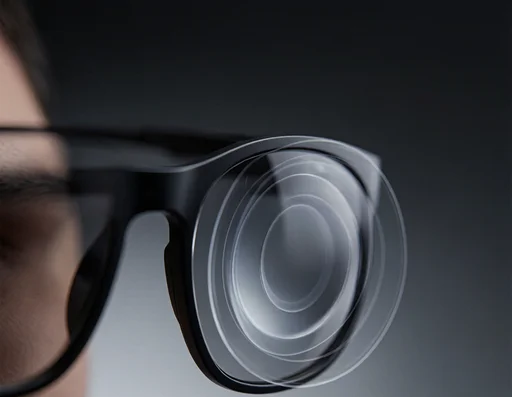
Let me cut straight to it: most standard consumer smart glasses don’t correct vision right out of the box. But a lot of models are designed to work with prescription lenses, so you can get all the smart features and clear vision in one pair.
I’ve lost count of how many customers tell me they held off buying smart glasses for months because they assumed there was no way to add their prescription. The good news is, smart prescription glasses are way more accessible now than they were even two years ago. Models like our YJ009-M2 and YJ-AR002 are built with replaceable lens structures, meaning any local optical shop can swap in your custom myopia, hyperopia or astigmatism lenses.
That said, it’s not one-size-fits-all. If you have a very strong prescription, progressive lenses or special lens coatings, always check compatibility first. Ultra-curved or super thin frames can’t always handle every prescription type, and there’s nothing worse than ordering a pair only to find out your optician can’t fit lenses to it.

How expensive is smart glass
Quick heads up before we dive in — this search term pulls in two totally unrelated products, and we see people mix them up every single week.
If you’re here looking for wearable smart eyewear, pricing runs a huge range. Entry-level smart audio glasses cost about the same as a decent pair of polarized sunglasses. They handle calls and music, no fancy extras, and they’re perfect for people who want to try the category without dropping a ton of money.
Mid-range models step up with better build quality, longer battery life, features like photochromic lenses or magnetic dual-lens designs, and more comfortable all-day wear. These are our best sellers for daily commuters and regular users.
Premium branded models, like the Ray-Ban Meta line, sit at a higher price point. You’re paying for the brand name, the camera integration and the app ecosystem. Top-tier models with a built-in smart glass display are the priciest of all, since the projection hardware adds a lot to manufacturing costs.
If you landed here looking for architectural smart glass for windows or office partitions, that’s a completely different product. Electrochromic smart glass is priced per square foot, depends on size, thickness and installation, and it’s a building material — not something we sell as an eyewear supplier.
My general rule of thumb for buyers: don’t just chase the lowest upfront price. A slightly more expensive frame that works with your prescription and has replaceable parts will save you money in the long run, compared to a cheap pair you can’t actually wear every day.
What will smart glasses do
I get this question a lot from people who’ve only seen flashy tech ads and aren’t sure what these actually do in real life. The short answer: it depends entirely on which model you buy.
At the most basic level, nearly all smart glasses handle hands-free calls, music, podcasts and turn-by-turn navigation audio. Think of them like wireless earbuds built into glasses frames. That’s the core function 90% of people use 90% of the time.
Mid-range models add extras like touch controls, polarized UV lenses, longer battery life and prescription compatibility. They don’t necessarily do wildly more things — they just do the core functions better and more comfortably.
Higher-end artificial intelligence smart glasses add features like hands-free cameras, real-time translation, voice note transcription and notification overlays. These are cool, but I always tell buyers to be honest with themselves. If you never travel internationally or don’t post social content often, you’ll probably never use half those features.
As for what they’ll do in the future? From what I see in the industry, the biggest upgrades aren’t holograms or full AR. They’re lighter frames, longer battery life, better offline AI and more natural-looking designs that are indistinguishable from regular glasses. The lightest smart glasses today already feel almost identical to standard eyewear, which is a huge leap from the clunky designs of just a few years ago.
What are the Ray-Ban smart glasses
If you’ve seen any smart glasses marketing, you’ve almost certainly seen these. Ray-Ban Meta smart glasses are a co-branded line between Meta and Ray-Ban, putting smart electronics inside classic Ray-Ban frame styles.
The current mainstream model is the ray ban meta gen 2 smart glasses, which comes in a bunch of frame shapes — from the iconic Wayfarer to the newer ray ban meta skyler smart glasses design, so there are options for different face shapes. Most models have a built-in camera for hands-free photos and short videos, open-ear speakers, touch controls and voice assistant access.
You may have seen the news that meta launched two new $499 prescription smart glasses recently, which has brought a lot more attention to the prescription side of the category. Just keep in mind that even on branded models, prescription lenses are usually an extra add-on cost on top of the base frame price.
All the advanced features run through the Meta View app, and you need a Meta account to unlock camera controls, firmware updates and social sharing. That’s the biggest complaint I hear from buyers — a lot of people don’t want to make an account just to use a pair of glasses.
Do smart glasses really work
I’ll be totally honest here: it depends entirely on how you’ll use them. For the right person, they’re a total game-changer. For the wrong person, they’ll end up in a drawer after a week.
If you drive for work, commute by bike or foot, or spend all day running between meetings, they absolutely work as advertised. Being able to take calls, skip tracks and hear navigation without pulling out your phone is genuinely convenient, and it’s safer for walking and driving too.
If you sit at a desk 9 hours a day with your phone right next to you, you probably won’t get enough use out of them to justify the cost. There’s nothing wrong with that — they’re just not for everyone.
One thing I will say: don’t expect studio-quality audio. Open-ear speakers sound great for casual listening and calls, but they won’t beat a good pair of in-ear buds for sound quality. The tradeoff is that you can still hear traffic and people around you, which is a big safety plus.
How to factory reset Meta smart glasses
If you own a pair of Meta smart glasses and you’re dealing with constant connection drops, glitches or pairing issues, a factory reset fixes the problem about 90% of the time. I walk clients through this all the time.
It’s pretty simple. Put the glasses inside their charging case, close the lid for a few seconds, then open it back up. Press and hold the button on the inside of the case until the indicator light flashes red and white. Once it stops flashing, the glasses are reset, and you can pair them to your phone again like new.
Just keep in mind this will erase all saved settings and pairing history, so you’ll have to set everything back up in the Meta View app afterwards. It’s a quick fix, and it saves you from having to contact support for most basic issues.
Are smart glasses FSA eligible
This is one of the most common questions we get from US-based buyers, and the answer is a little nuanced.
For the most part, standard smart glasses are not FSA eligible on their own. They’re classified as consumer electronics, not medical devices, so you can’t usually use FSA funds to pay for the full pair.
That said, there’s an exception: if you add prescription lenses to the frames, the cost of the lenses themselves is often eligible for FSA or HSA reimbursement, depending on your specific plan. A lot of our customers buy the frames from us, take them to their optician to get prescription lenses fitted, and then submit the lens cost to their FSA.
I always recommend checking directly with your FSA provider before buying, since rules vary a lot from plan to plan. Don’t assume it will be covered, only to find out later it’s not.
Is Samsung working on smart glasses
Rumors about Samsung smart glasses have been floating around for years, and the short answer is yes — they are working on the technology. But there’s still no widely available mass-market consumer model you can go out and buy today.
From what we hear through industry channels, Samsung’s focus has mostly been on AR glasses designed to work with the Galaxy ecosystem, aimed at developers and enterprise use cases first. They haven’t jumped into the everyday consumer audio glasses market the way Meta has.
If you’re a Samsung phone user, you don’t need to wait for an official Samsung pair. All standard Bluetooth smart glasses work perfectly with Samsung phones for calls, music and navigation. You don’t get the deep ecosystem integration a first-party model would have, but for most people, the core functions work just fine.
Can you make smart glasses with Arduino
I get this question every few weeks from DIY hobbyists and tinkerers, and let me keep it real: you can make a basic prototype, but you won’t end up with something you’ll want to wear every single day.
With an Arduino board, a small battery, a Bluetooth module and a speaker, you can rig up a pair of modified glasses that play audio and take calls. It’s a fun project if you like building things and learning how the tech works.
But making a pair that’s comfortable, balanced, safe and sounds good is a whole different story. Proper smart glasses are engineered so the weight is evenly distributed across the frame — even a few grams off will make them slide down your nose or hurt your ears after an hour. You also need proper battery protection circuits to avoid safety risks, which is easy to mess up in a DIY build.
If you’re just experimenting, go for it. If you want something for daily use, stick with a mass-produced model that’s been tested for comfort and safety.
How Prescription Lenses Work in Real OEM Orders
Because we manufacture on OEM/ODM terms, we see how vision correction plays out in actual production runs. A meaningful share of the overseas projects we quote include a prescription option, and there are two established ways to handle it: an insert frame that carries Rx lenses behind the stock front lens (cheaper, swappable, works with any optician), or factory-fitted prescription lenses ground to order (cleaner look, but higher unit cost, longer lead time, and each diopter range needs its own lens stock).
If you’re buying prescription smart glasses as an end user, the practical question to ask is whether the Rx lens is replaceable when your prescription changes. On the manufacturing side, the frame needs a deeper lens chamber and adjustable nose pads to accommodate inserts — one of many details that separates glasses designed for wearability from a gadget strapped to your face.
Are there other smart glasses besides Meta
Absolutely. Meta is the most famous consumer brand, but it’s far from the only option. There are great picks for every use case and budget.
- Amazon Echo Frames smart glasses: Built for people deep in the Alexa ecosystem, with hands-free voice control and smart home integration. No camera, which is a plus for privacy-focused buyers.
- Solos Airgo 3 smart glasses: Designed specifically for runners and cyclists, with lightweight frames and fitness-focused audio coaching.
- Even Realities G1 / G2 smart glasses: Budget-friendly entry-level options for people who want to try smart glasses without spending a lot.
- Smart safety glasses: Industrial-grade models with impact-resistant lenses, built for construction sites, warehouses and field work.
- Factory-direct models like ours: No brand markup, focused on core functionality, prescription compatibility and reliable performance.
You might also hear about Project Aura smart glasses from older Google projects, but those never really took off for mainstream consumers. And there are constant rumors about meta oakley smart glasses for sports, but as of now, there’s no official mass-market release.
Mainstream Smart Glasses Side-by-Side Comparison
| Model | Prescription Support | Built-in Camera | Mandatory App | Best For |
|---|---|---|---|---|
| Ray-Ban Meta Gen 2 smart glasses | Paid official service | Yes | Yes (Meta account required) | Style-focused users, social content creators |
| Amazon Echo Frames smart glasses | Limited third-party | No | Yes (Amazon account) | Alexa ecosystem power users |
| Solos Airgo 3 smart glasses | Limited | No | Yes (fitness app) | Runners, cyclists and fitness users |
| Even G2 smart glasses | No | No | No | Casual first-time trial users |
Our Top Factory Models for Daily Wear
| Model | Best For | Battery Life | Standout Feature | My Personal Take |
|---|---|---|---|---|
| YJ009-M2 | Prescription glasses wearers | 7–8h | Magnetic swap dual lenses | The most practical daily pick for anyone who wears corrective lenses |
| YJ008-C | Daily commuters and drivers | 7–8h | Polarized UV lenses, classic frame | Our best-selling unisex everyday model |
| YJ011-A03 | Office workers who go in and out all day | 4–5h | Photochromic light-adjusting lenses | Perfect for people who move between indoors and outdoors constantly |
| YJ-AR002 | Frequent international travelers | 7–8h | Offline AI translation + hands-free camera | Worth every penny if you travel for work regularly |
At the end of the day, my number one tip for anyone shopping for smart glasses is this: don’t buy based on the longest feature list. Buy based on what you’ll actually use every single day. If you just need hands-free calls and music on your commute, a basic audio model will serve you far better than an expensive premium pair with a camera and AR features you’ll never touch.
If you’re interested in our smart glasses series, feel free to get in touch with us. As an original manufacturer with full production capacity, we offer direct factory supply and customizable solutions to meet your business demands. We look forward to establishing long-term win-win cooperation with you.We offer a full range of smart glasses equipped with diverse functions tailored for all usage scenarios.
Buying or sourcing vision-correcting smart glasses? We manufacture them — including prescription options — in our own Dongguan facility. As the original manufacturer with full in-house production, we offer direct factory supply and genuine customization for business buyers. Tell us your market and volume, and let’s talk specifics.