First identify what “replace” means for your exact model. Swapping a magnetic sun-lens attachment, changing a prescription lens, and replacing a scratched permanent lens are different jobs. A removable overlay may be designed for ordinary users. A prescription lens set in an electronic frame may require an approved optical provider. Some frames are not supported for replacement at all. Do not pry a lens out because another brand’s video shows a similar-looking frame. The safest first step is to check the maker’s model-specific service policy and lens compatibility.
Why smart-glasses lenses deserve a different check
Ordinary spectacles are already sensitive to frame shape, optical center and lens thickness. Smart glasses add electronics in the arms or bridge, charging contacts, microphones, cameras or a display depending on model. A frame can look conventional while having less tolerance for twisting or heat during lens installation. The way a lens seats in the frame may also differ between variants that share a brand name. A seller’s claim that “prescription is possible” does not tell you whether your existing pair can be retrofitted, whether a replacement part is sold, or who is authorized to fit it.
Ray-Ban’s official Meta smart glasses FAQ says prescription-lens options exist for supported models. It also says the manufacturer warranty remains intact for added prescription lenses only when the work is done through an eligible certified retailer. This is a model- and market-specific rule, not a universal rule for all smart glasses. Ray-Ban’s prescription-lens document further emphasizes a valid prescription and eligible participating locations for the situation it describes. Check the current version and region before arranging service.
| Job | What is being changed | First verification |
|---|---|---|
| Magnetic sun attachment | Separate front piece over the main lenses | Exact attachment model and intended user instructions |
| Prescription conversion | Main lenses in the optical frame | Prescription compatibility and approved provider |
| Scratched-lens service | Damaged main lens or coating | Maker’s spare-part and service policy |
| Display-optic repair | Optical element used by a display | Manufacturer repair channel; do not assume a retail lens swap |
Find the exact model and lens configuration
Record the full model code, frame size, current lens type and whether the eyewear includes a display. Photograph any markings inside the temples and save the receipt or order confirmation. A model family name may cover multiple frame shapes or generations. An optical shop needs the specific frame, not just the phrase “smart glasses.” If your pair has a removable sun front, identify whether the attachment is a genuine part for that frame and whether its magnets or clips have changed between revisions.
For prescription work, take the current prescription and any fitting information the provider requires. Do not assume a lens prescription from an old pair is still suitable. The aim here is not to prescribe an optical correction; only a qualified eye-care professional can assess that. Ask the optical provider whether the frame is supported, whether the lens material and thickness fit, whether the electronics will be protected during fitting, and whether the completed glasses can be checked for fit and vision afterward.
Check the warranty before a third party touches the frame
Warranty terms can distinguish defects in the electronic frame from problems with aftermarket lenses or installation damage. Ray-Ban’s FAQ provides a clear example of why this matters: it conditions preservation of its manufacturer warranty on using an eligible certified retailer for added prescription lenses. The policy can vary by model and country. Ask for the current written terms for your exact product, rather than relying on a general statement from a forum or an unrelated optical chain. If a supplier offers a service, get confirmation of who is responsible if an arm, charging contact or hinge is damaged during the work.
A sensible service workflow
First, ask the manufacturer or authorized seller whether the requested lens change is supported. Second, identify the approved route: a designated optical partner, a manufacturer repair center, or a user-replaceable accessory. Third, obtain a quotation that separates new lenses, fitting, shipping and any frame inspection. Fourth, document the frame’s condition and basic functions before handing it over. Fifth, after service, verify both optical fit and electronic operation before the return period expires. These steps do not require you to disassemble the frame.
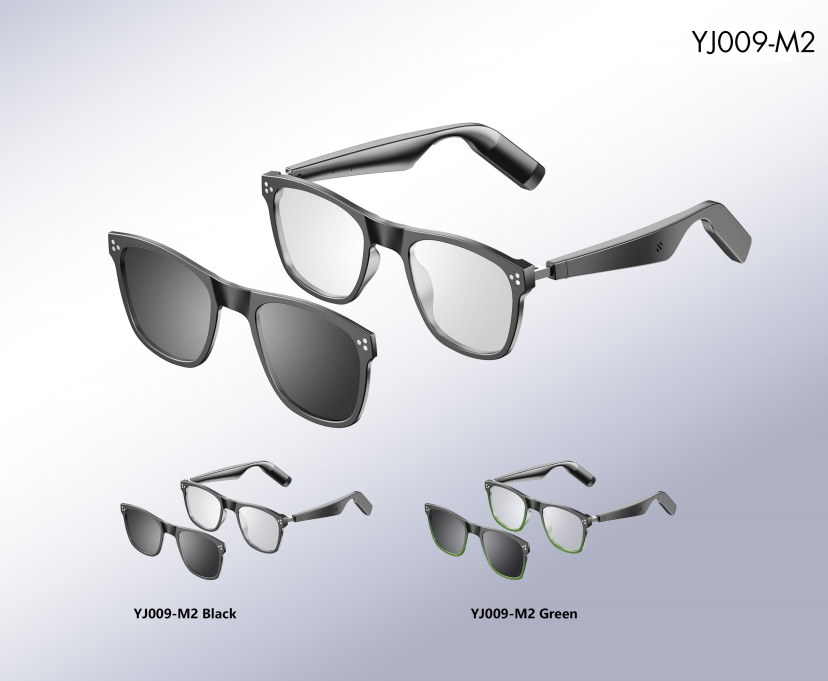
If the change is only a removable magnetic attachment, follow the product’s own instructions and verify that it sits evenly and does not block a sensor, camera or charging surface. Do not extend that user-level procedure to the main lenses. A magnetic attachment can change sun protection or appearance while the clear main lenses remain in place. The site shows this distinction in the YJ009-M2 magnetic dual-lens design and the YJ007-M3 magnetic dual-lens design. Confirm the actual spare-front availability and compatibility with the seller before ordering; a product image alone does not establish interchangeability.
| Question | Why ask it | Evidence to retain |
|---|---|---|
| Is this exact model supported? | Similar frames may differ in lens seating or electronics | Written model-specific confirmation |
| Who performs the work? | Service route may affect warranty and damage responsibility | Provider name and authorization status |
| Which lens types fit? | Prescription range, coatings and thickness may be limited | Approved lens options and quote |
| Are accessories interchangeable? | Magnetic fronts may be model-specific | Part number and compatibility list |
| What is checked afterward? | Optical and electronic functions both matter | Service report or acceptance checklist |
What to check after the lenses are fitted
Inspect the frame for uneven gaps, pressure marks, loose lenses and altered hinge movement. Wear the glasses briefly in a safe setting and check that the fit is comfortable and the optical correction is as expected. Then check the electronic features that the model actually has: power, charging, audio, microphones, camera, indicator lights or display alignment. A display model may need more than a basic optical check because lens geometry can affect viewing. If anything seems wrong, contact the fitting provider promptly and describe the observed issue rather than attempting to adjust the electronics yourself.
Keep a copy of the original order, the new lens invoice, the provider’s fit confirmation and any written warranty clarification. These records help resolve later questions about what was changed and when. If the item is being prepared for resale or a team deployment, also note the lens prescription’s ownership and privacy implications. A personalized prescription should not simply be passed to another wearer as though it were a neutral accessory.
When replacement may not be the best option
If the maker does not support the frame for lens replacement, a new supported frame may be safer and more economical than an unofficial retrofit. If the lens is part of a display optical system, manufacturer service may be the only reasonable route. If the issue is merely glare or sun exposure, an approved removable attachment might meet the need without disturbing the main lenses. If the frame itself is bent or damaged, repair or replacement of the whole unit may be necessary before any new lenses are fitted. These are decision paths, not diagnoses of a particular product.
Before you authorize the work
- Write down the exact model and frame size.
- Distinguish magnetic attachment from main-lens replacement.
- Check current manufacturer and regional service rules.
- Use a qualified provider for prescription fitting.
- Get written responsibility for fitting and electronic damage.
- Confirm lens options, total cost and post-service checks.
- Do not rely on a generic DIY video for an electronic frame.
“How to replace the lens” is therefore a service question before it is a mechanical question. The correct procedure depends on the exact frame, lens job and manufacturer policy. Confirm those three things first, then use the supported route and inspect both vision and electronics afterward.