Smart glasses can be convenient on a run, but the question is less about whether they play audio and more about whether the exact frame stays in place, remains comfortable, and is rated for the moisture it will meet. This guide gives runners a repeatable way to assess frame movement and sweat exposure before buying or using a pair. It does not report a product trial or imply that every audio frame is a sports frame. Running calls for a separate assessment of fit, awareness and moisture.
Start with the exact frame and its care instructions
“Smart glasses” includes audio frames, camera frames and display devices with different mass distribution and different moisture limits. A familiar-looking sunglass front does not tell you how the temples grip when the wearer bounces or how a charging contact behaves after a sweaty workout. Read the model-specific manual for fit, permitted adjustment, water-resistance language, cleaning and charging. If the seller only lists Bluetooth or battery capacity, ask for those instructions before treating the product as exercise equipment.
Ray-Ban’s official Meta smart-glasses FAQ describes its cited models as IPX4 water resistant, explains light-rain exposure, and calls for drying the glasses and charging areas after water exposure. That is guidance for those models, not a transferable rating for another brand. Even on an IPX4 device, the manufacturer says the product is not intended for submersion or extended liquid exposure. A runner should check the specific generation and region of the manual rather than assuming that a broad “water resistant” label covers heavy rain, salt-laden sweat and repeated washing.
| Area | Evidence to seek | Decision if missing |
|---|---|---|
| Frame size | Measurements and a return or fit policy | Try the frame before a long run |
| Moisture | Exact-model rating and cleaning instructions | Do not assume sweat or rain tolerance |
| Temple adjustment | Manufacturer-approved fitting method | Do not heat or bend an electronics temple |
| Lens role | UV, prescription and impact documentation as applicable | Keep separate eyewear for the unmet need |
| Audio | Controls and volume guidance for the actual model | Test awareness in a safe setting |
Check stability without inventing a performance score
Fit is personal: nose shape, ear position, hair, headwear and lens choice all change how a frame sits. An honest test compares the same frame on the same wearer through progressively more realistic movements. Begin indoors on a clean, dry frame. Note whether the bridge sits evenly, whether the temples press painfully behind the ears, and whether the glasses slide when the head turns. Do not modify electronic temples unless the manufacturer explicitly permits adjustment; a standard optical shop procedure for an ordinary plastic frame may damage a battery, antenna or speaker in a smart frame.
A short progression for an individual wearer
First walk for several minutes, look down as if checking a watch, and turn the head left and right. Then jog briefly in a safe, uncrowded place. If the front repeatedly descends or one temple lifts, record that observation rather than tightening the frame by guesswork. Repeat while wearing the cap or headband normally used for running. A cap brim may contact the upper frame, and a headband may move the temples. Finally, repeat after ordinary perspiration begins, stopping if the frame shifts enough to distract from footing or traffic. These are proposed checks, not results from our own testing.
Keep a simple log: frame model and size, lenses, headwear, approximate duration, conditions, and what movement occurred. “Stayed level during a five-minute jog” is a useful personal observation; “run proof” is not. One wearer’s result also cannot establish a universal retention rating. If a seller offers a strap or grip accessory, confirm that it is compatible with the model and does not cover controls, vents or charging contacts. An improvised adhesive on the temples can create cleaning and warranty problems.
| Stage | What to observe | Stop or follow-up trigger |
|---|---|---|
| Stationary | Bridge alignment and temple pressure | Pain or uneven position |
| Walk and head turns | Sliding, tilt and control access | Repeated correction needed |
| Short jog | Bounce and downward movement | Frame obstructs vision or attention |
| With headwear | Contact with cap or band | Headwear displaces the frame |
| After perspiration | Grip and visible moisture near electronics | Instability or moisture beyond manual limits |
Separate sweat handling from water-resistance marketing
Sweat can collect at the nose pads, hinge and temple ends even when rain falls mainly on the lenses. A published IP code is one piece of evidence about a defined water test, not a promise that every part survives every exercise routine. Ask whether the maker distinguishes rain, sweat and cleaning. Check whether charging contacts must be completely dry before the glasses go into a case or connect to power. Do not rinse, soak, use compressed air or apply cleaning chemicals simply because the frame resembles ordinary sunglasses. Follow the exact manual, remove surface moisture promptly, and allow the device to dry as instructed before charging.
Also consider the environment around the run. Dusty trails, sunscreen on hands, coastal salt and sudden temperature changes may matter to hinges, lenses and contacts. A runner who is caught in conditions beyond the manufacturer’s guidance should stop using the electronics and follow the maker’s drying and service instructions. The goal is to avoid turning a modest splash rating into a broad outdoor durability claim. If the seller cannot provide a usable care guide, that uncertainty belongs in the buying decision.
Do not let audio or lenses weaken situational awareness
Open-ear audio leaves the ear canal physically open, but volume, wind and road noise can still mask cues. Test controls and speech prompts in a safe setting and keep attention on traffic, other runners and uneven ground. Where a route requires heightened awareness, pause playback. The presence of speakers does not make the glasses hearing protection. Nor does an ordinary sunglass appearance establish impact-rated sports eyewear. If the route or activity calls for protective eyewear, obtain the relevant model documentation and choose protection for that hazard.
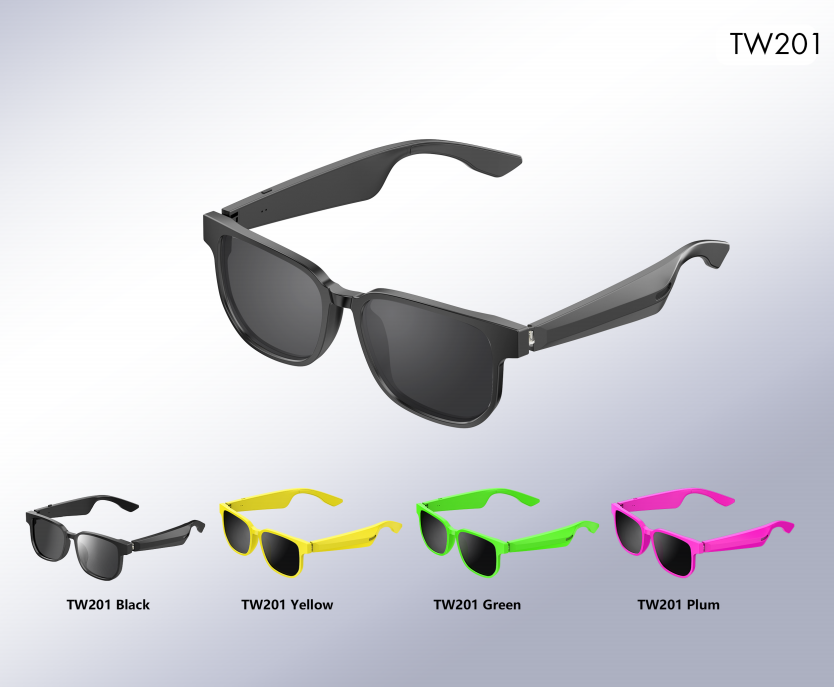
For comparison, the site’s TW201 smart music sunglasses page provides a frame example, while the YJ010 audio-glasses page shows another product to ask about. Neither link here asserts a verified sweat rating, measured running retention or particular audio quality. Ask for the current manual and confirm fit on the individual wearer before selecting either for exercise. Product photographs help identify form factors; they are not field-test evidence.
Make the decision from observed fit and documented limits
A sensible “yes” for running requires two different forms of evidence: the frame remains stable and comfortable on the wearer during a short safe trial, and its published care instructions cover the expected moisture. If either part is unresolved, use conventional eyewear and a separate audio option that suits the route, or postpone the purchase until the seller can answer. If fit is close but uncomfortable, ask an authorized fitter whether adjustment is allowed for that model. Do not force a change to electronics-bearing temples.
Record the conditions under which the trial succeeded. A dry treadmill check does not prove a rainy trail run; a short jog does not prove comfort over an hour. The point of the checklist is to turn “can I run in these?” into answerable questions about this frame, this wearer and this route. That also makes a return or supplier conversation more productive: you can describe exactly where the frame moved, what headwear was used, and which moisture claim still needs documentation.