The question “why smart glasses failed” suggests that the entire category had one decisive failure. The documented history is narrower. Google stopped selling Glass Enterprise Edition in March 2023 and ended its support period that September, but wearable cameras, audio glasses and display glasses have continued to develop. An old product’s end of sale is a fact; a universal explanation for the whole category is not. The useful question for a buyer is which problems a current model solves, and which risks remain. This article uses maker documentation to separate recorded events from reasonable design inferences.
What the record establishes, and what it does not
Google’s Glass Enterprise Edition announcement FAQ says sales stopped on March 15, 2023, with support through September 15, 2023. It adds that existing devices and software could continue working after support, while no further Google software updates were planned. That is evidence of a product lifecycle decision. The FAQ does not assign a single cause to it, provide consumer sales figures, or say that all forms of smart glasses were technically impossible. Claims such as “privacy alone killed smart glasses” or “the battery was the reason” would go beyond that source.
There is also a category problem. An audio frame with speakers but no display has different costs and use cases from a camera frame, a small information display, or a larger wired XR display. Google’s 2026 intelligent-eyewear announcement explicitly distinguishes audio glasses from display glasses. Its XREAL AURA announcement describes a wired display model with processing and battery in a separate puck. Comparing those products as though they were one interchangeable object makes the “failed or succeeded” debate less informative.
| Type | Typical output | Question a buyer should ask | Claim to avoid |
|---|---|---|---|
| Audio-first frame | Sound for calls, music or spoken help | Is it comfortable and audible in my setting? | Assuming it projects video in the lens |
| Camera-and-audio frame | Sound plus photo or video capture | How is capture indicated and controlled? | Assuming bystanders can always tell the state |
| Small in-lens display | Brief visual information | Is the information readable where I use it? | Assuming it replaces a phone screen |
| Wired spatial display | Larger app or media windows | What external compute, cable and power are required? | Assuming it works like untethered sunglasses |
Lesson one: the daily task must justify wearing a computer
A compelling demonstration can show a notification or first-person recording, but ordinary ownership means carrying, charging, cleaning and wearing the device repeatedly. An audio frame should solve an audio task often enough to justify its weight and fit. A camera frame should make capture materially easier while respecting the people nearby. A display should show information more usefully than checking a phone or watch. These are practical questions for buyers, not a documented explanation from Google for ending Glass Enterprise Edition.
Before shopping, write down three real tasks and how often each occurs. “Take a hands-free call during a walk” is testable. “Be more productive with AI” is not, until it becomes a specific action with a time, location and success condition. Try the controls in a quiet room and in the environment where you expect to use them. If an assistant needs a phone connection or an account, include those dependencies in the task test. A product can function correctly while being a poor match for a particular routine.
Lesson two: physical comfort and optics remain product questions
Glasses touch the nose and ears for long periods. Lens tint, prescription options, frame width, speaker placement and the user’s sensitivity to weight matter as much as a feature list. A display model adds optical placement and eye-box questions; an audio model may avoid a display but still fit poorly. Google’s 2026 announcement emphasizes eyewear design and partnerships with frame makers, which suggests comfort is a current design priority. It does not prove that every new pair is comfortable for every person.
Test fit for a realistic period, with the prescription or sun lenses you will actually use. Check whether a frame slips while moving, whether controls can be operated without accidental touches, and whether a display remains legible without forcing an unnatural gaze. For a screenless audio frame, do not score it as “failed” because it does not show a map; that may be a deliberate product scope. The purchase decision should match the stated task to the device type.
Lesson three: social trust is part of the design
A visible camera in eyewear changes how a room may respond, regardless of the wearer’s intention. Meta’s 2026 AI-glasses FAQ says its models use a capture LED to signal gallery photo or video capture and describes safeguards that disable the camera when that LED is blocked or tampered with. Those are Meta’s stated measures for its own glasses, not universal features of smart eyewear. The existence of a detailed maker explanation is evidence that bystander understanding remains a design problem.
Ask whether the specific product has a camera, how capture is indicated, whether an indicator applies to every recording mode, and where files are stored. Then check the policy of the place you plan to use it. A workplace, school, performance venue or private home may set rules that matter more than a product’s capability. If capture is unnecessary, an audio-only frame may make the social question simpler. That is a practical purchasing inference; it does not assert that a camera-free model is automatically welcome everywhere.
Lesson four: ecosystem support matters after the first month
Glass Enterprise Edition’s support history illustrates a durable risk for connected wearables: useful hardware can outlive the maker’s updates or an associated service. Google’s FAQ says the pre-installed Meet on Glass app would no longer receive ongoing support after September 2023 and could stop working later. That is a model-specific statement, but it suggests a general question worth asking of any purchase. What still works if the companion app changes, a service closes, the phone operating system updates, or the maker stops supplying security fixes?
Find the current support page before purchasing. Check the minimum phone operating system, app availability in your country, update policy, file export route and warranty service. If the device is for a business workflow, record who maintains its software and what happens to stored or cloud data when a device is replaced. A feature demonstrated in a launch video is weaker evidence than a maintained manual and a support path. Conversely, ending official support does not necessarily make a device physically stop working the next day; Google’s own FAQ explicitly says existing Glass Enterprise Edition devices can continue operating.
| Risk area | Before-purchase check | Evidence to keep |
|---|---|---|
| Useful task | Run the three actions you expect to use weekly | Manual and your own repeatable trial notes |
| Comfort | Wear the correct lens and frame configuration | Fit, return and optical-service terms |
| Privacy | Identify camera and capture-indicator behavior | Exact model’s privacy and recording guidance |
| Dependencies | Check phone, app, account and network requirements | Current compatibility and support pages |
| Lifecycle | Ask what works after updates end | Update, repair and data-export policy |
Lesson five: avoid turning a current listing into a historical proof
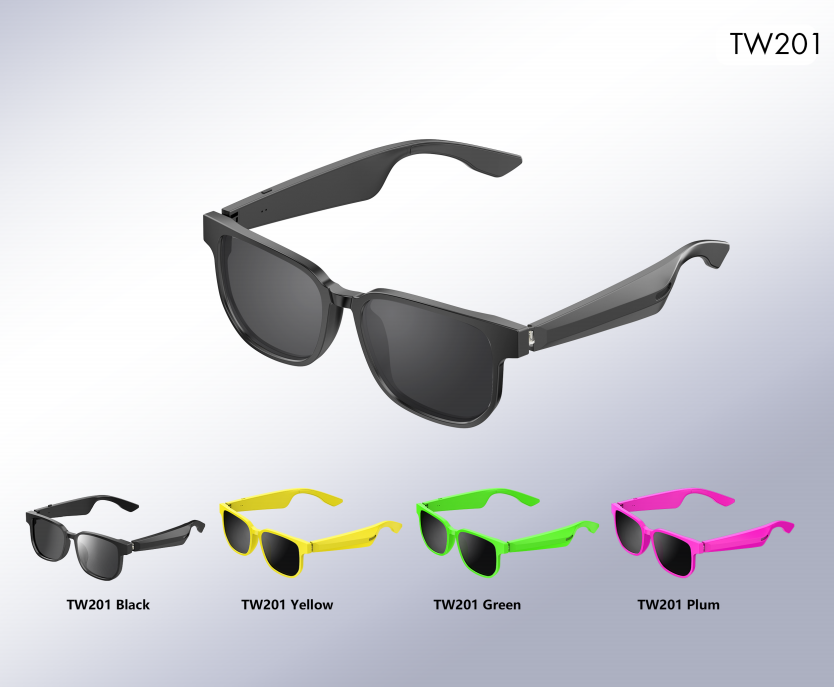
This site’s TW201 smart music sunglasses and YJ-AR002 camera smart glasses illustrate two different catalog directions: audio-oriented eyewear and a camera-equipped frame. Their pages can help a buyer ask the right feature and fit questions. They do not prove why Google ended a product, how many people bought any brand, or whether either site model resolves all the risks above. Ask for exact model documentation, current app requirements and a return path before relying on either for a specialized task.
Likewise, the presence of new platforms does not prove every old problem has disappeared. Google now discusses audio and display eyewear within Android XR; Meta describes privacy controls for its camera models. Those are meaningful maker statements, but comfort, public acceptance, battery behavior, app support and local rules still need model-level checks. A buyer should be skeptical of any article that leaps from one discontinued device to “all smart glasses failed,” or from one new launch to “smart glasses have finally solved everything.”
The useful conclusion
Early products left concrete lessons: define the daily task, test the fit, understand capture signals, and examine software dependence and support duration. Google documents the end of Glass Enterprise Edition sales and support, while current makers document different design responses. The reasons any individual buyer abandons a pair can vary, and the official sources here do not quantify them. Treat “why smart glasses failed” as a prompt for a better evaluation of a specific model, not as a settled single-cause history.