簡単な答え: A power bank can be recharged away from a wall outlet with a compatible folding solar panel, a vehicle USB adapter or, on a specifically designed model, a hand crank. The amount of energy available depends on panel area, sunlight, electrical losses and the pack’s input rating. A tiny panel molded into a battery case should be treated as a supplemental source unless the maker publishes credible measured output. For a trip or emergency kit, plan around watt-hours and a reserve rather than a promise printed in mAh.
このガイドは についてです エネルギーをバッテリー パックに戻します。 それは私たちを補完します ソーラー パワー バンクのパフォーマンス ガイド, which explains solar output in more detail. The estimates below are illustrative calculations with stated assumptions, not field tests of our products or a guarantee of emergency phone service.
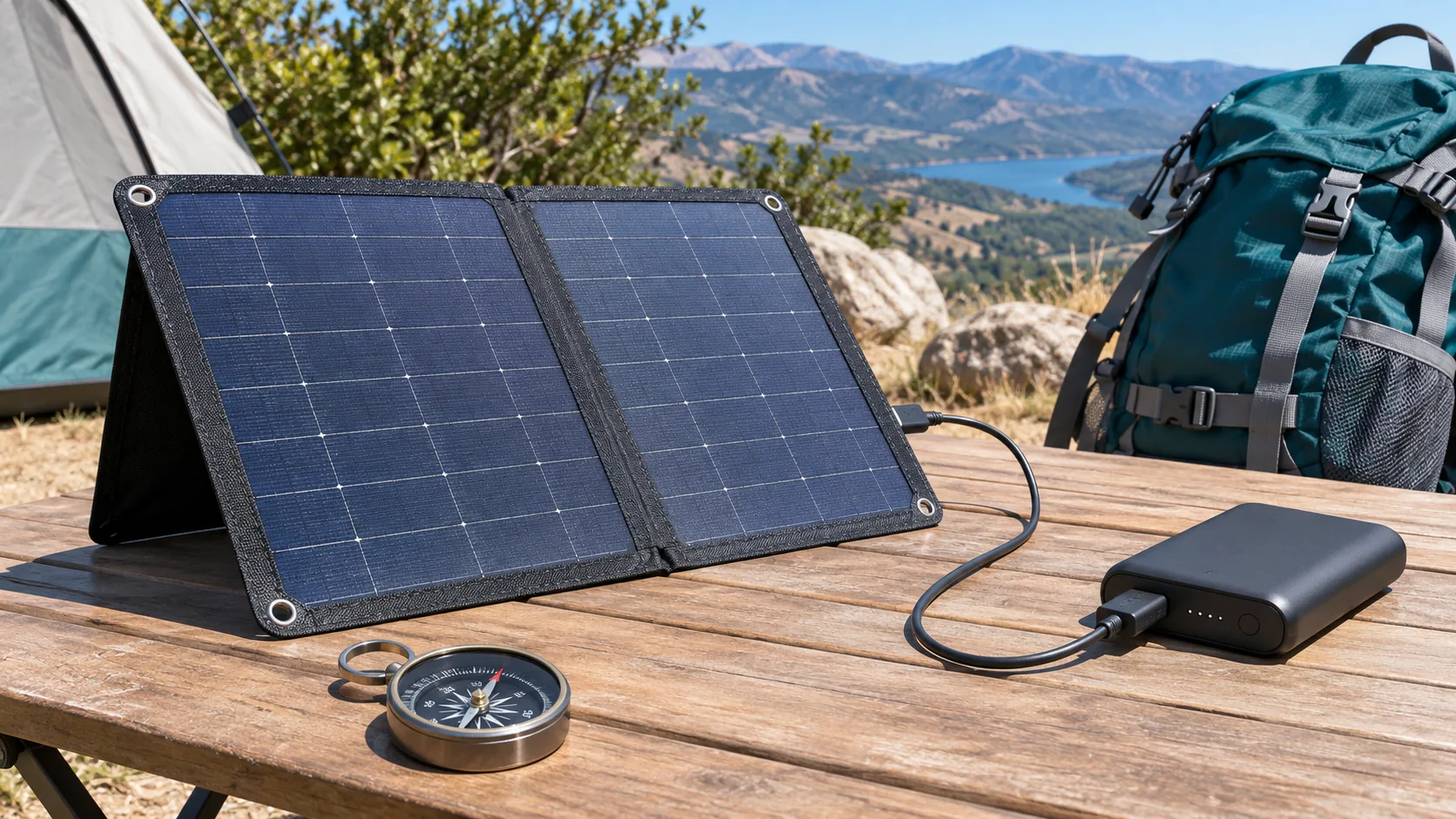
Start with the energy you need, not the largest mAh number
Battery capacity is often printed in mAh at a cell’s nominal voltage. To plan across solar panels and USB devices, convert to watt-hours: Wh = Ah × nominal V. For example, a hypothetical 10,000 mAh pack at 3.7 V contains 10 Ah × 3.7 V = 37 Wh at cell level. A 20,000 mAh pack under the same assumption contains 74 Wh. The energy delivered through a USB output will be lower because conversion and charging use energy. Likewise, the energy drawn from a solar panel or vehicle source to refill it will be higher than the cell-level Wh. Use the model’s label when available instead of assuming every pack uses 3.7 V.
| 計画の質問 | 何をチェックするか | なぜそれが重要なのか |
|---|---|---|
| どのくらいのエネルギーが蓄えられますか? | Wh or mAh plus nominal V on the pack label | パネル出力とデバイスの必要性との比較が可能です |
| どれくらいの速さでエネルギーを受け入れることができますか? | USB-C or other input voltage/current and protocol | 強力なパネルは、パックの入力制限を超えることはできません |
| あなたのデバイスはどれくらい消費しますか? | Device battery Wh or measured daily use | Prevents planning around a nominal capacity alone |
| 太陽はどのくらいの期間利用できませんか? | 天気、日陰、季節、オリエンテーション、予約日 | 計画に別のエネルギー源が必要かどうかを決定します |
ソーラー: パネル評価と供給エネルギー
米国エネルギー省は、太陽光発電モジュールの定格出力が標準試験条件 (1,000 W/m² 照明および 25°C セル温度) で測定されると説明しています。 実際の日光、パネルの温度、角度、日陰はさまざまです。 DOE パフォーマンスの概要 とその 太陽放射プライマーを参照してください。 したがって、折りたたみパネルの 20 W の銘板は、屋外で 20 W を供給するという意味ではありません。
透明として 計画例, suppose a 20 W panel delivers an average 10 W into a compatible charging circuit for four useful hours. That is 40 Wh at that point in the system, before losses and any interruptions. It might be enough to materially replenish a 37 Wh cell-level pack, but it is not evidence of a full recharge because both conversion loss and the final charge stage matter. If clouds halve the effective average, the input becomes about 20 Wh. These numbers describe assumptions you can replace with local measurements; they are not test results for a particular panel.
| 説明条件 | 想定される平均入力 | Four-hour energy before later losses | 実用的な意味 |
|---|---|---|---|
| 良い日差しと好意的な向き | 10W | 40 Wh | 小さなパックに役立つ可能性があります |
| 部分的な雲または不十分な角度 | 5W | 20 Wh | 部分的な補充を期待してください |
| 重い日陰 | 1 W | 4 Wh | Do not count on this as the main source |
The panel’s actual output can drop sharply when it is partly covered. Place it according to the manufacturer’s instructions, keep electrical connections dry and avoid leaving a lithium pack where the sun can overheat it. If using a panel with an integrated battery, distinguish the panel’s measured output from the battery’s stored capacity. A 30,000 mAh pack such as the 30,000 mAh solar power bank may store more energy, but that does not imply a small integrated panel can refill it in one day.
ハンドクランク: 便利なバックアップ、限られたエネルギー源
A hand crank can provide power without sun or a vehicle, but its output is limited by mechanical effort, generator efficiency and the pack’s electronics. Do not assume a rate from product photography or a generic “minutes of crank = minutes of phone use” slogan. Ask for a measured curve showing generator output, crank speed, input energy stored and test conditions for the exact model.
For scale, if a hypothetical crank supplies an average 2 W of electrical power for 15 minutes, that represents 0.5 Wh before storage losses. Compare that with a hypothetical 37 Wh cell-level pack: it is a small fraction of a full recharge. The calculation illustrates why a crank is best treated as a short-term contingency, not a primary source for a multi-day trip. The 20,000 mAh hand-crank model は、実際に測定されたクランク出力と電荷経路について質問するための出発点です。 この記事では、モデル固有のランタイムをアサートしません。
車両充電とパススルー充電
A car’s 12 V outlet can be convenient when a vehicle is available, but the USB adapter plugged into that outlet determines available modes. Compare its per-port output with the pack’s input label, and follow the vehicle and adapter instructions. Secure loose cables so they do not interfere with controls. Never rely on an unattended running engine or a vehicle battery for emergency energy without considering fuel, ventilation and starting reserve.
“Pass-through” means the power bank receives energy while also supplying another device. Some products support it; others do not, or limit it to certain ports. It may generate extra heat and can make charge-state estimates confusing. Verify support in the exact product manual. If an emergency phone must stay powered, connect it directly to the best available source when safe and compatible; do not assume a daisy chain has no loss or interruption.
| 方法 | 主な利点 | 計画制限 | 最高の使用 |
|---|---|---|---|
| 折りたたみソーラーパネル | 日中の再生可能インプット | 光と向きに大きく依存します | パネル エリア用の部屋での日帰り旅行 |
| 統合されたミニパネル | 常にパックに添付されます | 通常、小さな領域によって制約されます | 測定出力が信頼できる場合、補足的なトップアップ |
| ハンドクランク | 太陽なしで動作します | 持続的な人間の努力のためのエネルギーが低い | 限られた不測の事態の充電 |
| 車両の USB アダプター | 車両の運転中の予測可能なソース | 互換性のあるアダプターと車両へのアクセスが必要です | すでに車両が利用できる場所を移動します |
悪い日を乗り切るオフグリッド プランを構築します
- 実行する必要があるデバイスをリストし、必須のコミュニケーションをオプションのエンターテイメントから分離します。
- Estimate daily energy demand in Wh using device labels or a measurement, then add a reserve for poor weather or heavy use.
- 十分な面積と検証済みの出力接続を持つパネルを選択してください。 パックの入力制限を確認してください。
- 適切なケーブルを持ち運び、コネクターを湿気や負担から保護してください。
- 旅行の前にセットアップ全体をテストします: パネル、レギュレーターを使用する場合はレギュレータ、パワー バンク、ケーブル、電話。
- Keep a second charging path, such as a vehicle adapter or extra precharged pack, where safety needs justify one.
For emergency planning, avoid treating one solar power bank as the only way to call for help. If the battery is damaged, swollen, leaking or unusually hot, stop using it and follow the guidance in our power bank safety article.
OEM を購入する前に尋ねるべき質問
Request model-specific solar wattage at the panel’s test conditions, measured output under stated real light, battery Wh, USB input profiles and a diagram of the charging path. Ask whether pass-through is supported and under what thermal limits. For a crank model, request a repeatable test with crank speed, duration and usable energy stored. Compare samples with the final bill of materials and insist that any public runtime claim quote its test conditions. Those questions are more useful than unverified statements such as “fully charges in the sun.”
よくある質問
小さなソーラー パネルで大型の電力バンクを完全に充電できますか?
It depends on measured panel energy over time, weather and the pack’s Wh. Small panel area normally limits output. Do not infer a one-day recharge from the battery’s mAh label.
通常の毎日の充電には、ハンドクランクで十分ですか?
Not usually a comfortable primary plan. Use measured output and your device’s Wh demand to decide, and reserve the crank for limited contingency use if the model supports it.
別のパックからパックを再充電できますか?
互換性のあるデバイスの中には、この方法で接続できますが、変換損失と、プロトコルまたはパススルーの制限があります。 両方のマニュアルを確認し、ループや無人セットアップを避けてください。
ソースと制限
主な情報源: 米国 PV 評価条件とフィールドのばらつきに関する DOE および U.S. ソーラー リソースの基本。 上記のすべてのワット数とランタイムの例は、前提条件であり、当社の製品をテストするという主張ではありません。